


“No theoretical checks…can render us secure. To suppose that any form of government will secure liberty or happiness without any virtue in the people, is a chimerical idea.” James Madison, Founder.
Assessed by Michael Leppert
“When considering the best form of government for the new nation of the United States, the American Founders looked, in particular, to the unique governments of ancient Greece, Rome, and Israel for insight. While they appreciated Greece’s direct democracy, they recognized its instability and impracticality for America. However, they saw that Rome’s Republic, though having its own vulnerabilities, possessed many qualities that aligned with America’s needs, principles, and aspirations. It also was morally consistent with Israel’s first government in its consensual representation. The Founders looked to Rome’s system as a model for the American system.” Signing of the Constitution by Thomas Prichard Rossiter, c1860-1870.
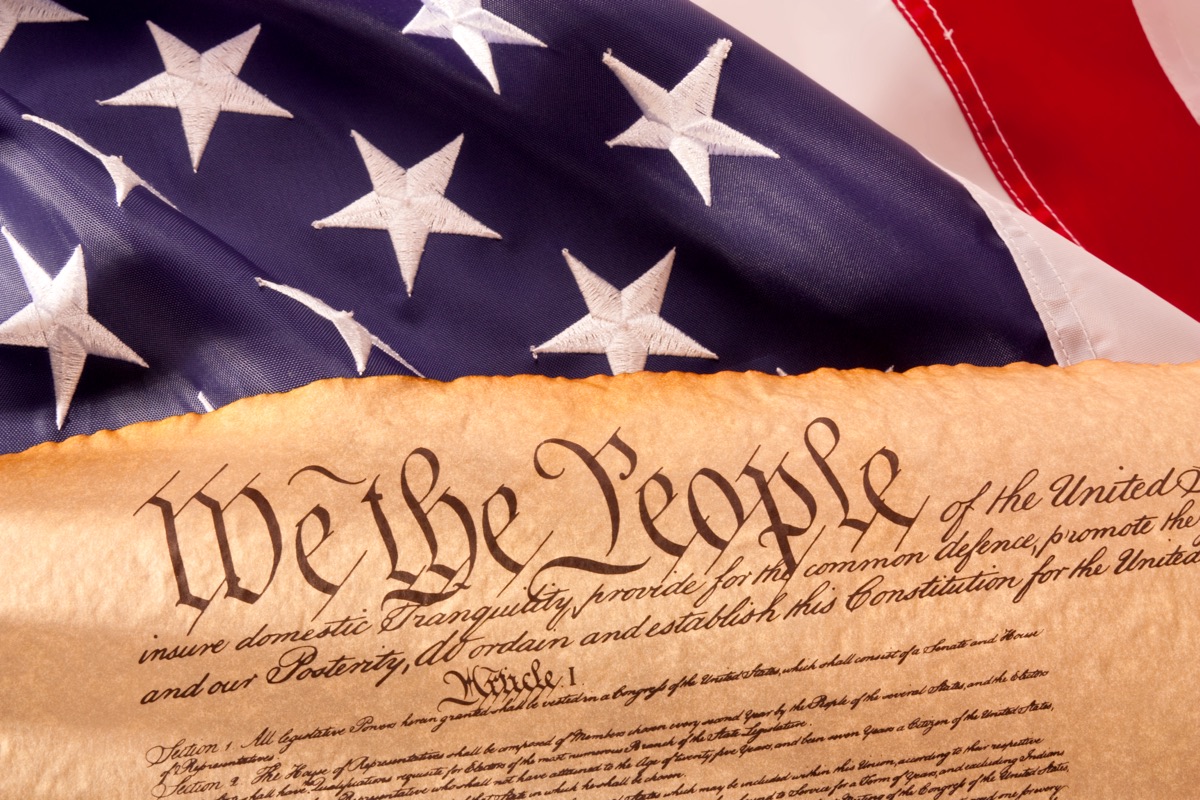
The Founders ultimately created a constitutional republic for the United States—with indirect self-governance by the people through elected civil representatives, as seen in Rome. They chose this system because it upholds Americans’ governing values and principles of popular sovereignty, consent of the governed, and limited self-government. More specifically, they saw that a republic:
- works well for a large nation
- has restraints to guard against instability, corruption, and tyranny
Firstly, since the whole citizenry cannot feasibly assemble to govern the nation, a republic allows a small body of representatives to assemble and govern the nation for the people, on the people’s behalf. Secondly, because a republic filters the people’s rule through representatives, it buffers the negative effects of factions and majority tyranny, facilitating more just, stable governance.
Advantages of Representative Democracy
The benefit of elected representatives is that, ideally, they often possess more virtue than the people themselves and are more likely to protect the public good and citizens’ rights. Elections of representatives, says Madison, help to sift out “unworthy candidates” and allow the people to choose individuals “who possess the most attractive merit and the most diffusive and established character.” Thus a republic, Madison explains, “Serves to: refine and enlarge the public views by passing them through the medium of a chosen body of citizens whose wisdom may best discern the true interest of their country and whose patriotism and love of justice will be least likely to sacrifice it to temporary or partial considerations. …[T]he public voice, pronounced by the representatives of the people, will be more consonant to the public good than if pronounced by the people themselves.”
A republic restrains impulsive governance and, as Donald Lutz affirms in his 1988 Origins of American Constitutionalism, encourages deliberation to determine “whether a proposed policy serves the community’s permanent, aggregate interests.” In addition, America’s large size further diffuses factions and majority tyranny, Madison notes, by making it “less probable that a majority of the whole will have a common motive to invade the rights of other citizens.”[32] In sum, the Founders, observes Garbarino, sought to create a self-government with “the checks and restraints that [direct] democracy lacked” and that “had a better chance at promoting human flourishing than did a true democracy.” A republic is, they believed, the most moral, just, and workable system for America.
Creating A Mixed Republic
Like ancient Rome, the Founders created a republic with a mixed system — incorporating elements of democracy, aristocracy, and monarchy — with checks and balances on each power and separation of powers to restrain the government itself. They created a two-body legislature with a Senate resembling the Roman Senate, based on aristocracy and a House of Representatives resembling the Roman Plebeian Council’s representatives based on democracy. (The U.S. Senate was originally elected indirectly by state legislatures, but today both houses of Congress are elected by direct popular election.)
The Founders also created two chief executives, President and Vice-President, resembling the two Roman consuls based on monarchy. These executives are elected indirectly by an electoral college, just as Roman consuls were elected indirectly by its council. To limit conflict between the two consuls on decision-making, as happened in Rome, the Founders gave the president preeminence. To prevent military leaders from seizing power by force, as Rome experienced, they made the civilian president the commander-in-chief of the armed forces. To prevent leaders from changing the government and its laws for their own interests, as occurred in Rome, the Founders created a written constitution. (Unfortunately, this is not iron-clad.)
They also included a law that requires each state in the union to practice republican government. In addition, they separated the functions of government into not just two branches, as Rome had, but three branches — legislative, executive, and judicial. As such, the Founders created a republic for America modeled in many ways after the Roman Republic but possessing alterations to strengthen it and to further guard against corruption and tyranny. “The Founders consciously imitated the political systems of Ancient Rome so as to replicate their success” and “also took steps to modify Rome’s weaknesses in the hope of avoiding its fall.”
Without Virtue There Can Be No Liberty
It is important to note that, in creating a republic, the Founders recognized the essential need for a republic for a virtuous people in order to function successfully. Citizens, they saw, have the moral and civic responsibility to be civilly educated, uphold and support just laws and policies that protect citizens’ rights and freedoms, and elect moral representatives who seek the common, national good and practice restrained, limited government. As such, the Founders continually exhorted the people of the need to maintain virtue. For example, Founder Richard Henry Lee, remarks “It is certainly true that popular government cannot flourish without virtue in the people.”
Bill of Rights contributor, George Mason, confirms, “Justice and virtue are the vital principles of republican government.”
Founder and President, George Washington, states in his Farewell Address that “virtue or morality is a necessary spring of popular government.”
Founder, Benjamin Franklin, points out, “Only a virtuous people are capable of freedom.”
Madison similarly observes, “No theoretical checks…can render us secure. To suppose that any form of government will secure liberty or happiness without any virtue in the people, is a chimerical idea.”
The Founders further believed that good, moral religion is the most effective way for people to gain virtue. For this reason, they greatly valued and encouraged moral religion — particularly Christianity — in society. Founder, John Adams, thus observes, “We have no government armed with power capable of contending with human passions unbridled by morality and religion. … Our Constitution was made only for a moral and religious people. It is wholly inadequate to the government of any other.”
Indeed, “The Founders”, says Steven Waldman in his 2008 Founding Faith: Providence, Politics, and the Birth of Religious Freedom in America, “were fairly obsessed with the question of how to instill enough virtue into citizens that a republic could flourish. Institutions that could imbue personal and communal values…were viewed as essential building blocks for democracy.” In this regard, education and religion, school, and church play a crucial role, in a free republic, the Founders believed.
When constructing a national government for the United States, the American Founders sought to create a political system that was moral, just, stable, and practical. They sought a system that upheld Americans’ philosophical beliefs and governing principles of freedom, popular sovereignty, consent of the governed, and limited self-government—principles to which the early Puritans, the American colonies, and founding-era Americans, like themselves, had long aspired.
Americans also wanted a system that was morally consistent with their understanding of wise governance as conveyed in the Bible and ancient Israel.
The Founders created the first modern republic — a political system that deters corruption and tyranny, encourages peace and stability, protects citizens’ individual rights and freedoms, maintains law and order, and reflects American values.
The Founders’ departure from old-world monarchy and the creation of a constitutional republic was a major shift in world history and governance and one of the most important outcomes of the American Revolution.